What Is All-Wheel Drive and How Does It Work?

About AWD Care, Maintenance & Winter Safety

We help drivers across the Greater Toronto Area navigate unpredictable Ontario weather every day. When you drive an All-Wheel Drive (AWD) vehicle, the drivetrain continuously monitors wheel speed and automatically distributes engine power between the front and rear axles—no manual shifting required.

On Southern Ontario roads—where a single commute along Highway 401 or Highway 407 can take you from bare, salted asphalt to slush ruts and unplowed off-ramps—AWD gives you steady, automated acceleration traction. However, we always remind our customers of one critical rule: AWD helps you get moving, but it does not help you stop faster.

Below, we break down how these systems work, how they compare to other drivetrains, and how to maintain them properly.


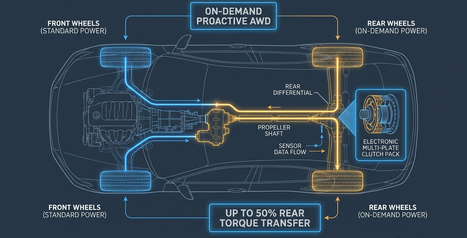
On-Demand (Proactive) AWD

To save fuel and reduce mechanical drag, these systems power only two wheels during dry highway cruising. The moment you accelerate hard or hit slick pavement, the system automatically sends up to 50% of the engine’s torque to the secondary axle.

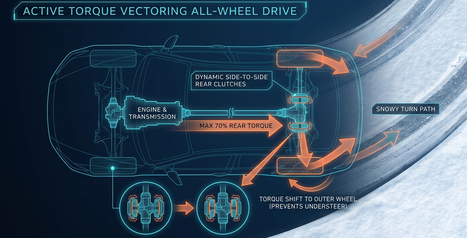
Active Torque-Vectoring AWD

Designed for sharper handling and heavy snow, these systems can send a higher percentage of power rearward (up to 70% in certain setups). They use dual rear clutch packs to shift power side-to-side between the left and right rear wheels, helping you hold your line through slippery turns.

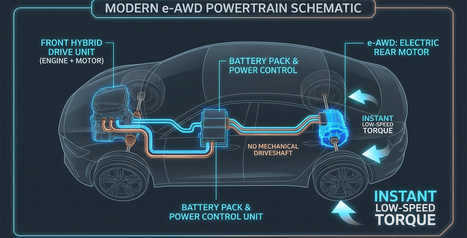
Hybrid and Electric AWD

Instead of using a heavy mechanical driveshaft to connect the front and rear axles, these vehicles place an independent electric motor on the rear axle. This delivers instant torque at low speeds whenever you need extra traction.

What Is the Difference Between AWD, 4WD, and FWD?

Drivers often ask us whether they need All-Wheel Drive or Four-Wheel Drive for local winters. While both send power to all four wheels, they are engineered for very different conditions. 

 Drivetrain Architecture  Power Delivery & Engagement Safe on Dry/Patchy Pavement?  Fuel Economy Impact Primary Use Case
All-Wheel Drive (AWD) Automated clutch packs or center differential Yes (safe at all highway speeds) ~5%–10% penalty vs. 2WD Daily commuting across rain, snow, slush, and mixed pavement
Four-Wheel Drive (4WD) Driver-selected mechanical transfer case No (risk of driveline binding on dry/patchy roads)  Higher weight and hardware penalty Off-road trails, deep mud, unplowed work sites
 Front-Wheel Drive (FWD) Front axle only Yes (safe on all surfaces)  Baseline efficiency Urban and highway commuting on regularly cleared roads


Why Does Dry-Pavement Matter?

Part-time 4WD systems lock the front and rear driveshafts together in a rigid 50/50 split. When you turn a corner on dry or patchy pavement, your front wheels travel a slightly longer path than your rear wheels.

Locking them together on bare asphalt causes driveline binding, wheel hop, and unnecessary stress on the transfer case. Because automated AWD allows the wheels to rotate at different speeds, you can leave it engaged year-round without worrying about changing road surfaces.

Does All-Wheel Drive Help You Stop Faster in Snow and Ice?

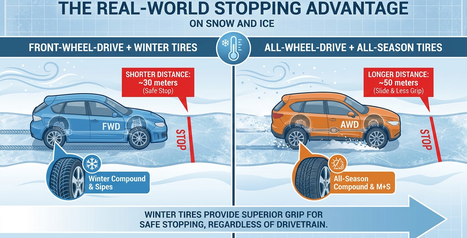
No. Passenger vehicles generally have four-wheel braking. Whether you drive an AWD SUV or a front-wheel-drive sedan, your stopping distance on snow and ice depends entirely on the friction between your tires and the road.

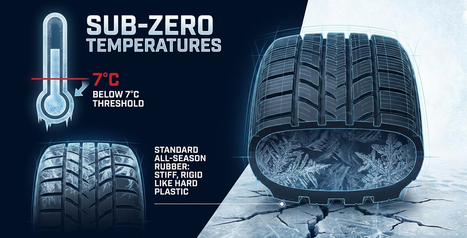
The 7°C Rubber Threshold

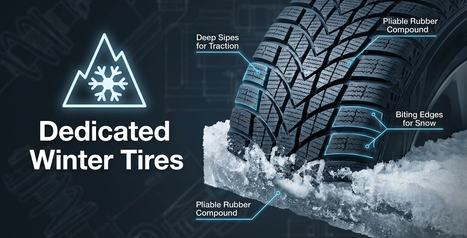
Standard all-season tire compounds begin to harden once temperatures drop below 7°C. Even on dry, cold pavement, stiff rubber loses grip and increases your stopping distance.

The Real-World Advantage

Independent testing consistently shows that a two-wheel-drive vehicle on winter tires stops shorter on snow and ice than an AWD vehicle on all-season tires. Combining AWD with dedicated winter tires gives you the complete safety package: confident acceleration and controlled braking.

What Maintenance Does an All-Wheel Drive Vehicle Need?

AWD systems have a few additional components, and to keep them running smoothly for the long haul, we recommend staying on top of four core maintenance habits.

Four Core AWD Maintenance Habits

AWD systems add a few extra mechanical components under your vehicle. To keep them running smoothly for the long haul, we recommend staying on top of four core maintenance habits:

  • Keep Tire Tread Depth Uniform: All four tires on an AWD vehicle need to share a matching rolling circumference. A tread depth difference as small as 2/32 of an inch can trick wheel-speed sensors into detecting constant slip, which can overheat clutch packs and cause premature rear differential wear.
  • Stick to Regular Tire Rotations: Rotating your tires on schedule ensures even wear across both the front and rear axles, extending the life of your tires and protecting your drivetrain.
  • Service Differential and Transfer Case Fluids: AWD rear differentials and transfer units work hard in Ontario winters. We recommend inspecting and changing these fluids according to your manufacturer’s schedule—typically every 40,000 to 50,000 km—to prevent fluid breakdown and low-speed cornering shudder.
  • Schedule Seasonal Underbody and Sensor Checks: Road salt and frozen snowbanks can take a toll on underbody splash shields, exhaust hangers, and suspension parts. We also check that your windshield cameras and radar sensors remain clear and properly calibrated for your active driver-assistance systems.

Frequently Asked Questions: AWD Vehicles

What Are the Most Common Questions About All-Wheel Drive? We've compiled a list below. If you're curious about something and you can't find the answer here, contact a member of our team. They're experts and would be happy to help!

Ready to Explore AWD Maintenance or Vehicles?

Whether you already own an AWD vehicle or you are comparing drivetrain options for your next commute, our team is here to help without the pressure.

  • Book AWD Service: Schedule a differential fluid inspection, tire rotation, or seasonal winter tire changeover with our service department.
  • Browse AWD Inventory: Filter our current new and pre-owned AWD sedans, crossovers, 3-row SUVs, and trucks to compare features at your own pace.
  • Talk to an Advisor: Visit us in person or book a test drive to experience how different AWD systems handle on local roads.